
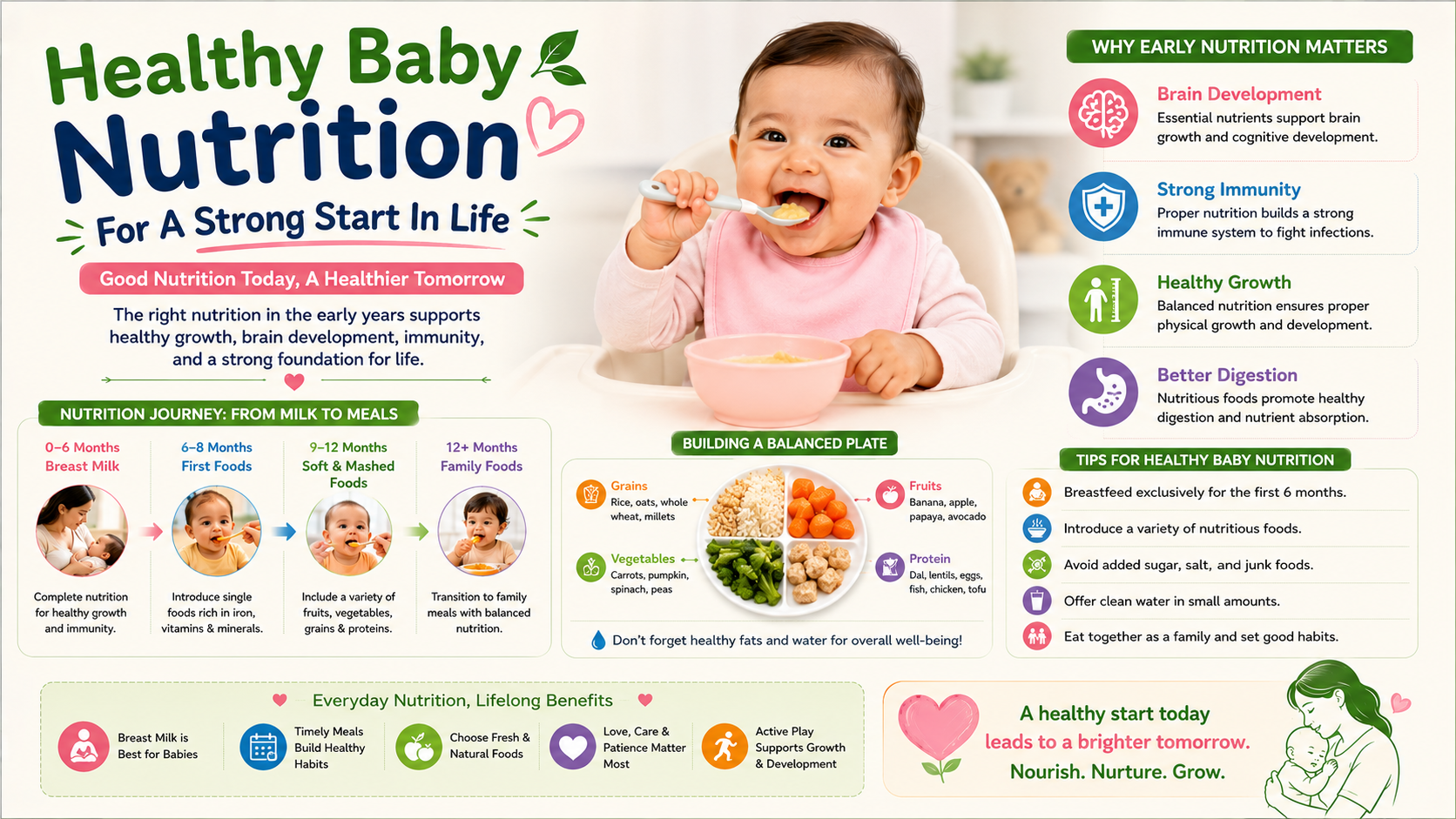
Healthy Baby Nutrition for a Strong Start in Life plays an important role in a child’s growth, development, and overall well-being. During the first years of life, babies experience rapid physical and mental development. The nutrition they receive during this period helps build a strong foundation for healthy growth, learning, and immunity.
Parents often want the best for their children but may feel overwhelmed by the amount of information available about feeding and nutrition. The good news is that healthy baby nutrition does not need to be complicated. A balanced approach, age-appropriate foods, and consistent healthy habits can help support a baby’s development from the very beginning.
Why Healthy Baby Nutrition Matters
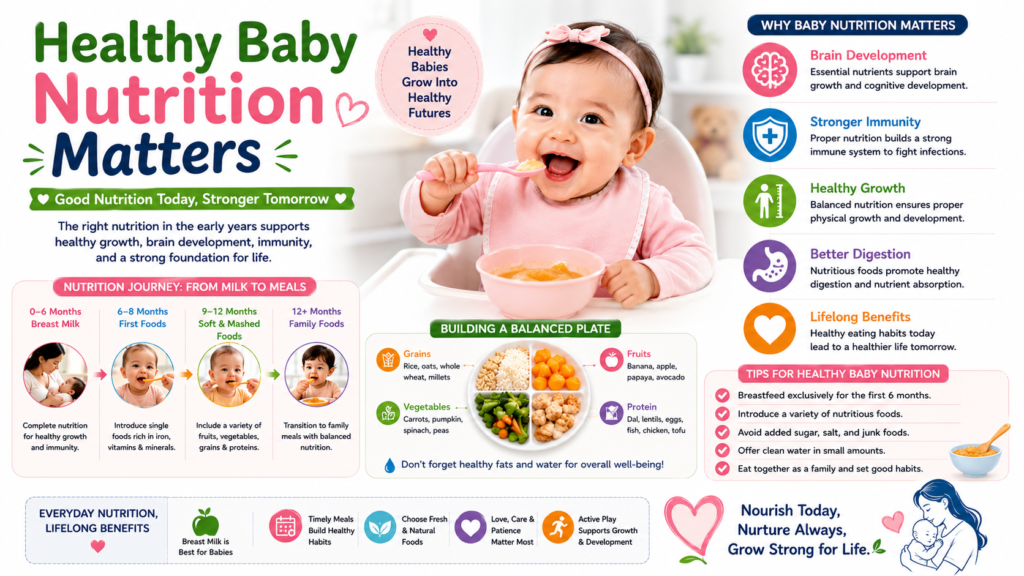
Good nutrition provides babies with the nutrients they need to grow strong and healthy. Every stage of development requires specific vitamins, minerals, proteins, fats, and carbohydrates.
Building A Strong Foundation
Proper nutrition supports:
- Brain development
- Healthy bone growth
- Strong muscles
- Immune system function
- Energy for daily activities
- Healthy weight gain
When babies receive balanced nutrition early in life, they often develop healthier eating habits as they grow.
Healthy Baby Nutrition During Early Development
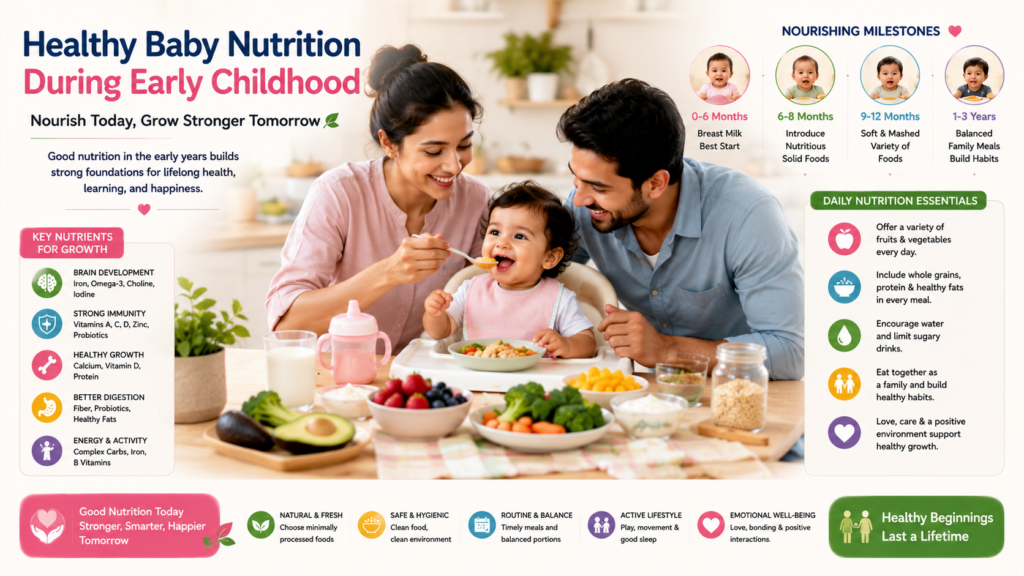
The first year of life is one of the most important periods for growth. Babies grow quickly, and their nutritional needs change as they reach new milestones.
Breast Milk & Infant Formula
For most infants, breast milk or infant formula provides complete nutrition during the first months of life. These feeding options supply essential nutrients that support healthy growth and development.
Parents should follow guidance from healthcare professionals regarding feeding schedules and nutritional needs based on their baby’s age and development.
Introducing Solid Foods
Most babies begin exploring solid foods around six months of age. This stage introduces new flavors, textures, and nutrients that support growth.
Choosing Nutritious First Foods
Parents often start with:
- Pureed vegetables
- Mashed fruits
- Iron-fortified cereals
- Soft-cooked vegetables
- Pureed proteins
Introducing foods gradually allows parents to monitor reactions while helping babies become comfortable with different tastes.
Healthy Baby Nutrition & Balanced Meals
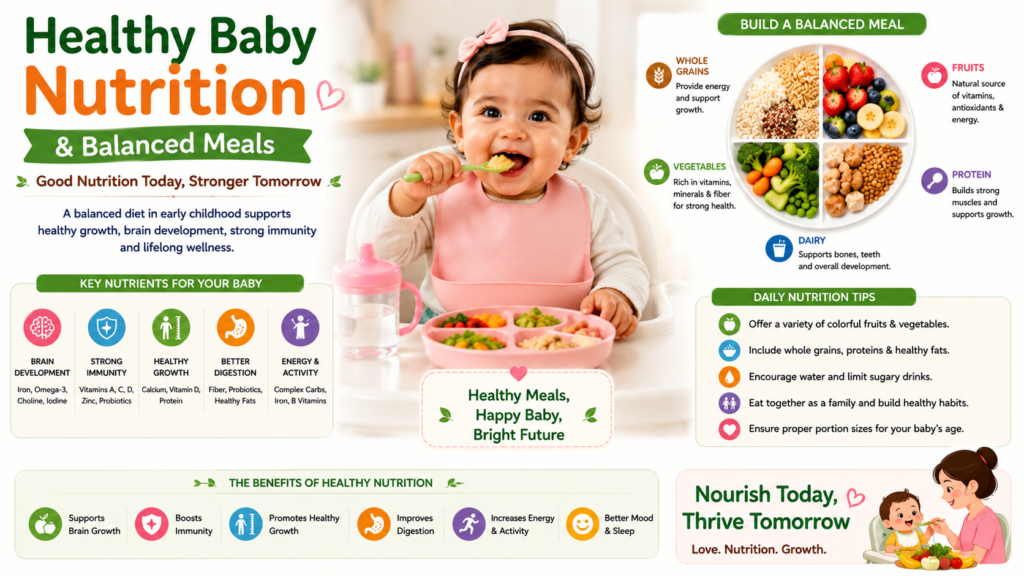
As babies grow into toddlers, balanced meals become even more important. A variety of foods helps provide essential nutrients while encouraging healthy eating habits.
Key Nutrients For Growing Babies
Healthy meals should include:
- Protein for muscle development
- Healthy fats for brain growth
- Fruits and vegetables for vitamins
- Whole grains for energy
- Calcium-rich foods for strong bones
A diverse diet supports healthy development and helps children become more open to trying new foods.
Foods That Support Healthy Growth
Certain foods provide important nutrients that growing babies need.
Nutritious Foods For Babies
- Avocados
- Bananas
- Sweet potatoes
- Oatmeal
- Yogurt
- Eggs
- Peas
- Soft fruits
These foods offer valuable nutrients while remaining easy for babies and toddlers to enjoy.
Healthy Baby Nutrition & Hydration
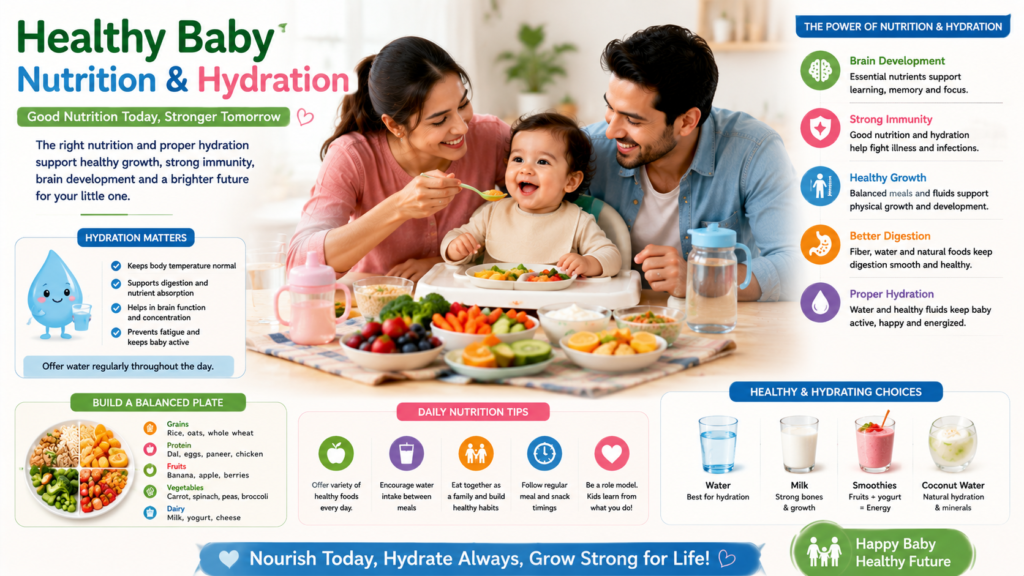
Nutrition is important, but hydration also plays a key role in overall health.
Importance Of Staying Hydrated
As babies begin eating solid foods, parents should pay attention to hydration needs. Water can become part of a healthy routine alongside milk or formula, depending on the child’s age and healthcare recommendations.
Proper hydration helps support:
- Digestion
- Energy levels
- Healthy skin
- Overall wellness
Good hydration habits can continue throughout childhood.
Common Feeding Challenges
Many parents experience feeding challenges during infancy and toddlerhood. These challenges often occur as children develop preferences and explore independence.
Picky Eating & Food Refusal
Some babies and toddlers may reject foods they previously enjoyed. This behavior is common and often temporary.
Parents can help by:
- Offering a variety of foods
- Staying patient during meals
- Avoiding pressure at mealtime
- Modeling healthy eating habits
- Reintroducing foods over time
Consistency usually helps children become more comfortable with different foods.
Healthy Baby Nutrition & Daily Routines
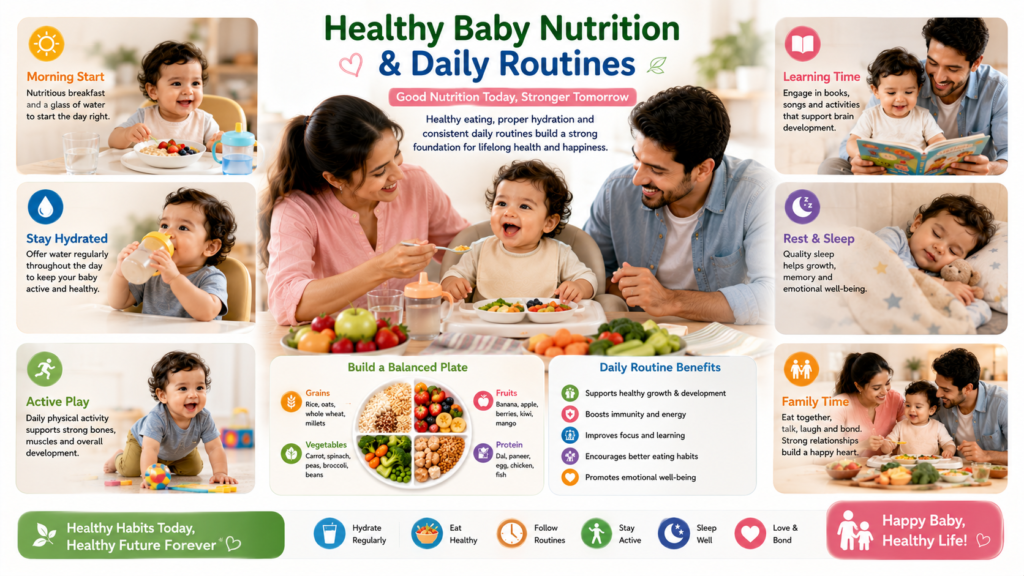
Daily routines help create structure around meals and snacks. Consistent schedules often support better eating habits.
Creating Positive Mealtime Experiences
Families can encourage healthy eating by:
- Eating together when possible
- Limiting distractions during meals
- Offering age-appropriate portions
- Encouraging self-feeding skills
- Maintaining regular meal times
Positive mealtime experiences help children build healthy relationships with food.
Promotion
Parents often search for reliable recommendations when choosing baby products, nutrition solutions, and family essentials. trustedclubs helps families discover verified promotions, trusted products, and useful parenting resources.
Using trustedclubs promotions can help parents explore quality products while staying within their budget and making informed choices.
Healthy Habits Beyond Nutrition
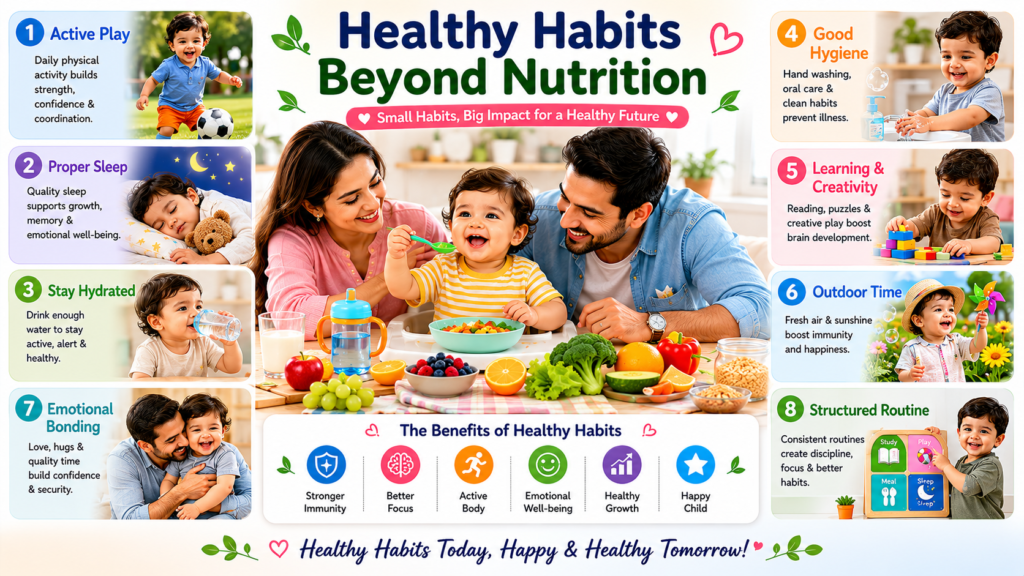
Nutrition is only one part of a healthy lifestyle. Other daily habits also contribute to a baby’s overall well-being.
Supporting Complete Development
Parents can promote healthy development by encouraging:
- Adequate sleep
- Active play
- Outdoor time
- Reading and interaction
- Consistent routines
These activities support physical, emotional, and cognitive growth alongside good nutrition.
Avoiding Common Nutrition Mistakes
Many parents worry about feeding their babies correctly. Understanding common mistakes can help create a healthier approach.
Simple Tips For Success
Avoid:
- Introducing sugary foods too early
- Relying heavily on processed snacks
- Skipping meal routines
- Offering too few food varieties
- Comparing one child’s eating habits to another’s
Every child develops at their own pace. Patience and consistency often produce the best results.
Healthy Baby Nutrition For Long-Term Wellness
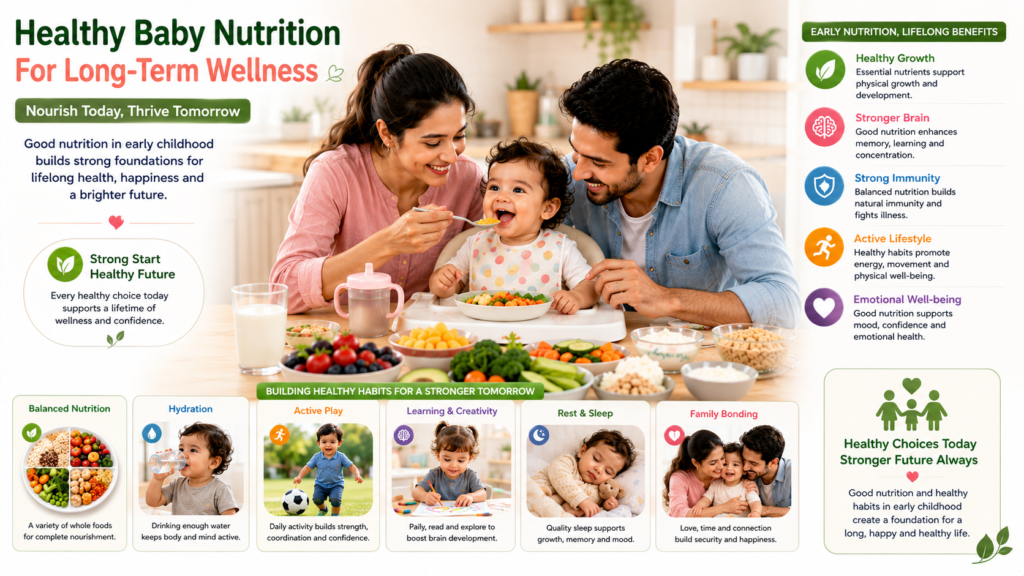
Healthy eating habits formed during infancy can influence food choices later in life. Children who experience balanced nutrition early often develop positive attitudes toward healthy foods.
Long-Term Benefits
Good nutrition can support:
- Healthy growth patterns
- Better energy levels
- Stronger immunity
- Improved learning and focus
- Positive eating habits
These benefits extend beyond childhood and contribute to lifelong wellness.
Final Thoughts
Healthy Baby Nutrition for a Strong Start in Life provides the foundation children need for healthy growth and development. Proper nutrition supports physical health, brain development, and overall well-being during the most important stages of early life.
Parents do not need perfect meal plans to support their child’s health. A balanced approach, nutritious foods, positive mealtime habits, and consistency can make a significant difference. By focusing on healthy nutrition and daily routines, families can help babies build strong foundations for a healthy and happy future.